
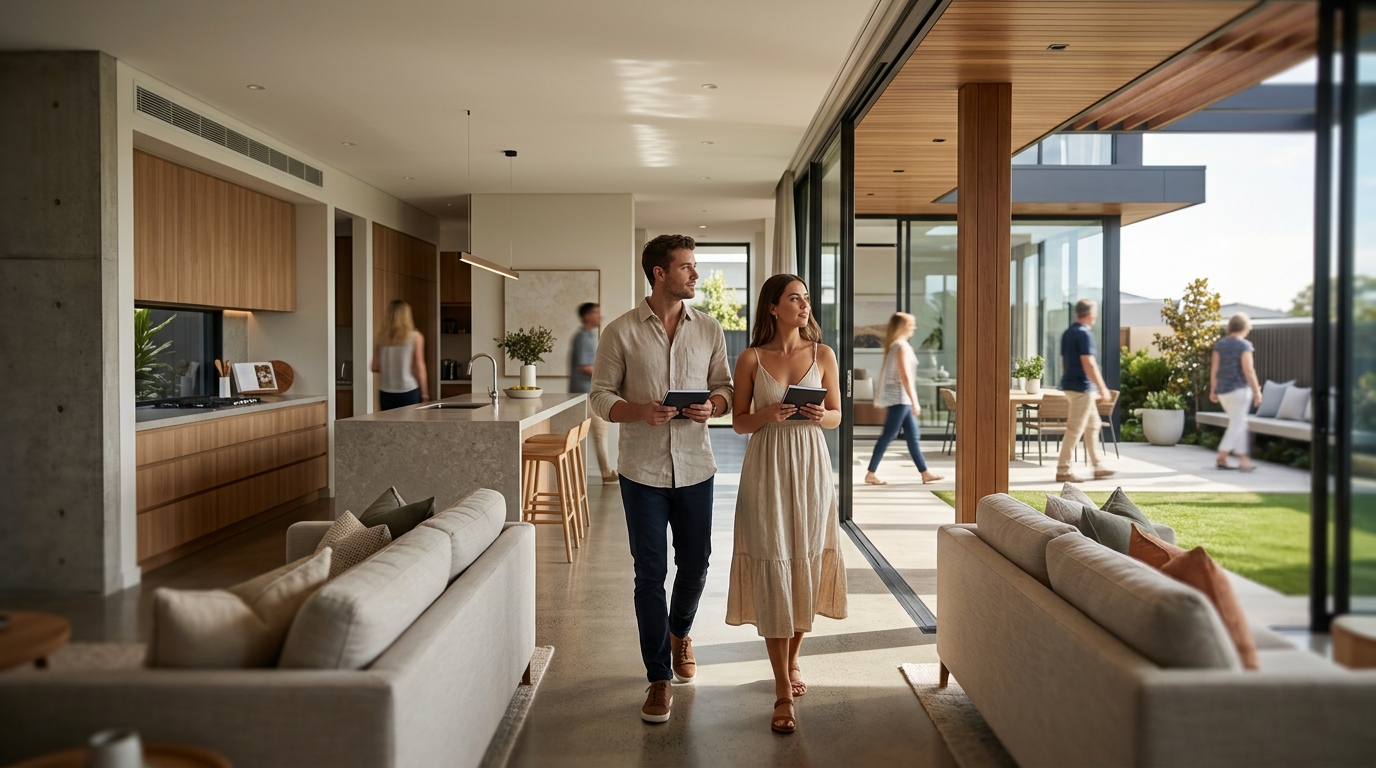
Buying a home in Sydney is one of the most significant financial decisions of your life, yet many buyers walk into display villages with a critical blind spot. According to recent housing market data, over 60% of first-time buyers in New South Wales report feeling overwhelmed by the sheer volume of options and hidden costs during their initial property tours. This statistic highlights a recurring pattern where emotional excitement overrides strategic planning, leading to regrettable commitments or missed opportunities. To navigate the competitive Sydney real estate landscape effectively, you must approach every display home visit with a rigorous, analytical mindset. This guide outlines the essential errors to avoid, ensuring you secure a property that aligns with both your lifestyle needs and long-term financial health. (Contact Us)
Understanding Your True Budget
The most frequent mistake buyers make is focusing solely on the advertised base price of the display home. This figure rarely reflects the final cost of your new residence. In Sydney, land costs, construction premiums, and government levies can significantly inflate the final price tag. You must calculate your total outlay, including stamp duty, legal fees, and bank registration costs, before stepping foot in a village.
Many buyers also fail to account for the cost of lifestyle upgrades. Display homes are designed to showcase premium finishes, such as stone benchtops, hardwood flooring, and high-end appliances. If you are not prepared to pay for these upgrades, you may find yourself disappointed with the standard inclusions. It is crucial to establish a realistic budget that includes a contingency fund for unexpected expenses during the construction phase. This financial discipline prevents buyer's remorse and ensures you do not overextend your borrowing capacity.
For a deeper understanding of how to structure your finances, explore our comprehensive finance guide which breaks down the hidden costs of building in NSW.
Evaluating the Layout and Flow
Display homes are meticulously staged to maximize perceived space. Furniture is often scaled down, and mirrors are strategically placed to create an illusion of grandeur. A common error is judging the actual size of rooms based on this staged environment. You must mentally strip away the decor and imagine your own furniture in the space. Does the layout support your daily routines? Is the flow between the kitchen, dining, and living areas logical for your family size?
Another critical aspect is the functionality of the bedrooms. In many Sydney suburbs, land sizes are shrinking, which impacts bedroom dimensions. Ensure that your master bedroom can accommodate a king-size bed and adequate storage. Check the position of windows and doors to ensure they do not obstruct furniture placement. A well-designed layout enhances livability, while a poor one can lead to long-term dissatisfaction. Visit our home design collection to see how different floor plans address these spatial challenges.
Assessing the Land and Orientation
The land you build on is permanent, while the house itself can be renovated. Ignoring the land's characteristics is a costly mistake. In Sydney, land orientation is paramount for energy efficiency and comfort. A north-facing block in the Southern Hemisphere receives optimal sunlight throughout the day, reducing heating costs and improving natural light. Conversely, a south-facing block may require significant investment in heating and lighting solutions.
Topography also plays a vital role. Sloping blocks can incur substantial additional costs for retaining walls, foundation work, and drainage systems. Flat blocks are generally more affordable to build on but may require careful planning for stormwater management. You must also consider the soil type, as reactive clay soils can lead to foundation issues if not properly managed. Understanding these physical constraints early in the process allows you to make informed decisions about which blocks to pursue. Learn more about our building process and land assessment methodologies.
Ignoring the Neighbourhood Context
It is easy to become so focused on the house that you neglect the surrounding environment. The neighbourhood dictates your quality of life, future resale value, and daily convenience. You must assess the proximity to essential amenities such as schools, public transport, shopping centres, and healthcare facilities. In Sydney, access to reliable public transport is a key driver of property value, particularly for commuters.
Additionally, consider the future development plans for the area. Are there major infrastructure projects planned that could disrupt your peace or increase traffic? Conversely, are there upcoming amenities that could boost the suburb's appeal? Understanding the growth trajectory of the suburb helps you make a sound investment. Research the local council's suburb growth guides to gain insights into future developments and community trends.
Overlooking Upgrade Costs
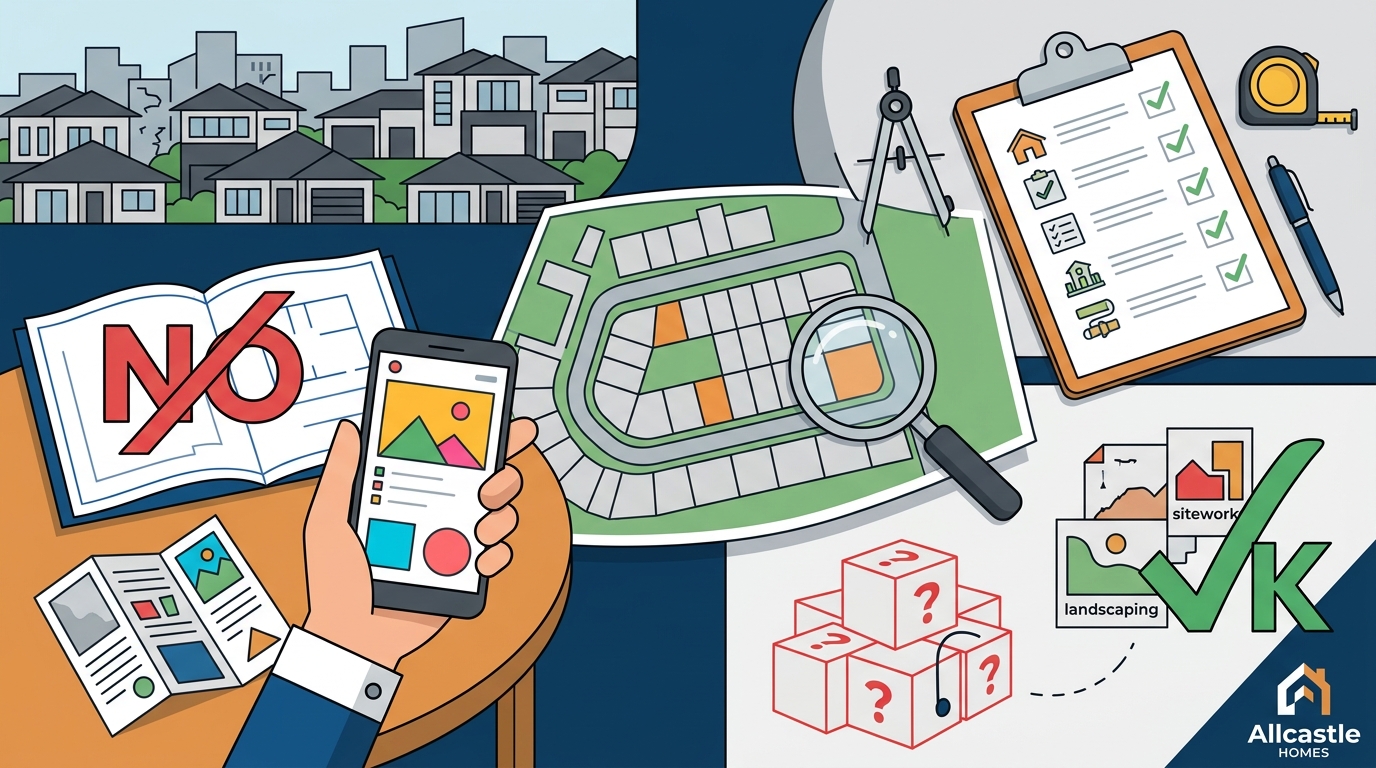
Display homes are designed to inspire, but they often come with a premium price tag for the upgrades shown. Buyers frequently fall in love with specific features, such as custom cabinetry or designer lighting, only to realize later that these upgrades are prohibitively expensive. It is essential to distinguish between what you want and what you need. Stick to a predefined upgrade budget and avoid impulse decisions during the tour.
Another common oversight is the cost of external works. Landscaping, fencing, driveways, and outdoor living areas are often not included in the base building contract. These external costs can add tens of thousands of dollars to your total budget. Plan for these expenses from the outset to avoid financial strain during the construction phase. Our upgrade package guide provides a transparent breakdown of standard versus premium options.
Failing to Ask Critical Questions
Many buyers are too shy or intimidated to ask questions during a display home tour. This silence can lead to misunderstandings and missed opportunities. You must ask about the construction timeline, the quality of materials used, and the warranty provided. Inquire about the builder's track record and their process for handling defects or variations. A reputable builder will welcome these questions and provide clear, honest answers.
Also, ask about the specific terms of the contract. Are there any exclusions or limitations that could affect your build? Understanding the legal and contractual aspects protects you from future disputes. Do not hesitate to request a detailed quote or a walkthrough of the contract with a professional. For expert advice on contract review, consult our contact page to speak with our team directly.
Comparison of Display Home Visit Strategies
| Strategy | Focus Area | Key Question to Ask | Common Pitfall |
|---|---|---|---|
| Emotional Tour | Aesthetics and Decor | Do I love the look? | Overlooking functional flaws and budget constraints. |
| Structural Audit | Layout and Land | Does the land suit my build? | Ignoring orientation and topography costs. |
| Financial Review | Costs and Upgrades | What is the total outlay? | Underestimating external works and stamp duty. |
| Neighbourhood Scan | Location and Amenities | How does this suburb grow? | Neglecting future development impacts. |
Key Takeaways
- Budget Accuracy: Always calculate total costs, including land, construction, and government levies, not just the base price.
- Layout Reality: Visualize your own furniture in the space to assess true functionality and flow.
- Land Orientation: Prioritize north-facing blocks for optimal energy efficiency and natural light in Sydney.
- External Costs: Account for landscaping, fencing, and driveways which are often excluded from building contracts.
- Neighbourhood Research: Investigate future infrastructure and development plans to protect your investment.
- Contract Clarity: Review all contract terms and exclusions with a professional before signing.
- Builder Reputation: Verify the builder's track record and warranty provisions to ensure long-term peace of mind.
Frequently Asked Questions
How long should I spend touring display homes?
There is no fixed time limit, but it is advisable to spend at least 30 to 60 minutes in each display home. This allows you to thoroughly inspect the layout, ask questions, and visualize your future life in the space. Rushing through tours can lead to missed details and regrettable decisions.
Are display home prices negotiable?
Display home prices are often fixed, but there may be room for negotiation on upgrades or incentives, especially if you are purchasing a block in a new release. It is always worth asking your sales consultant about current promotions or discounts.
What is the best time of day to visit a display home?
Visiting during different times of the day can provide valuable insights into natural light and noise levels. Morning visits are ideal for assessing sunlight orientation, while evening visits can help you gauge the neighbourhood's ambiance and traffic patterns.
Do I need to buy from the display home builder?
Not necessarily. While buying from the builder of the display home offers convenience and familiarity, you can also use the display home as a reference for design and quality. However, ensure you understand the builder's reputation and financial stability before committing.
What should I bring on a display home tour?
Bring a notebook, a measuring tape, and your floor plans if you have them. Taking notes and measurements helps you compare different properties objectively. Also, bring photos of your current home to visualize how your furniture might fit in the new space.
How do I assess the quality of construction in a display home?
Look for details such as the finish of joinery, the alignment of tiles, and the quality of fixtures and fittings. Ask the sales consultant about the materials used and the builder's construction standards. A reputable builder will be transparent about their processes and quality assurance measures.
Can I customize the floor plan of a display home?
Many builders offer customizable floor plans, allowing you to modify layouts to suit your needs. However, significant changes may impact the cost and construction timeline. Discuss your customization options with the builder early in the process to understand the feasibility and implications.
Start Your Journey with All Castle Homes
Avoiding these common mistakes can significantly enhance your home-buying experience in Sydney. By approaching display home tours with a strategic mindset, you can make informed decisions that align with your lifestyle and financial goals. All Castle Homes is dedicated to guiding you through every step of the building process, from land selection to final handover. Our team of experts is ready to assist you in finding the perfect block and designing your dream home. Visit our homepage to explore our latest releases and schedule a private tour today.