

Homebuyers in NSW are protected by the Home Building Act 1989, which mandates compulsory home warranty insurance and strict licensing for builders. These laws ensure that if a builder fails to complete a project or causes damage, the homeowner has a financial safety net. Understanding these statutory rights is essential for anyone planning to build a new home in Sydney.
The Home Building Act 1989
The primary legislation governing residential construction in New South Wales is the Home Building Act 1989. This Act establishes the legal framework for the home building industry, setting out the rights and responsibilities of both builders and homeowners. It is the cornerstone of consumer protection in the residential sector.
Under this legislation, builders must hold a valid licence to operate. The licence indicates the specific class of work the builder is authorised to perform, such as general building work or specialist trades. Homebuyers should verify a builder's licence status before signing any contract. This verification ensures that the builder is legally permitted to undertake the construction of your home.
The Act also governs the content of building contracts. It requires that contracts be in writing and contain specific mandatory clauses. These clauses include details about the scope of work, the contract price, and the rights of both parties. By standardising contract terms, the Act reduces the risk of disputes arising from ambiguous or missing information.
Compulsory Home Warranty Insurance
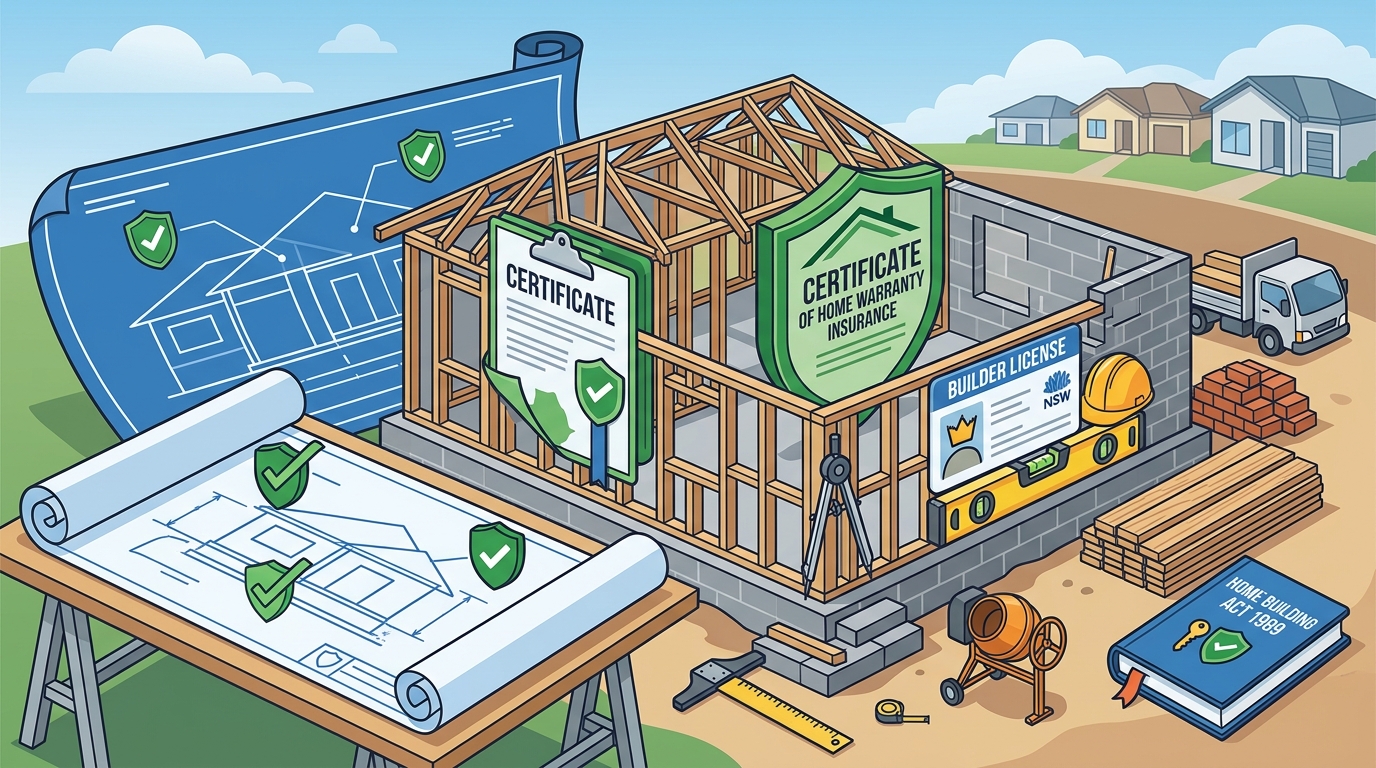
One of the most critical protections for homebuyers is the requirement for compulsory home warranty insurance. This insurance is mandated by the Home Building Act 1989 for all residential building work in NSW. It provides financial protection to homeowners if a builder fails to complete the work, dies, becomes insolvent, or disappears.
Builders must purchase this insurance before commencing work and provide the homeowner with a certificate of insurance. The certificate must be issued by an approved insurer and must remain in force for a period of six years from the date of completion. This long-term coverage ensures that homeowners are protected against latent defects and incomplete work for a significant period after the handover of the keys.
The insurance covers the cost of completing the work or rectifying defects if the builder is unable to do so. It does not cover general wear and tear or damage caused by the homeowner. However, it is a vital safety net that gives homeowners peace of mind, knowing that they are not left stranded if their builder encounters financial difficulties.
Consumer Guarantees and Warranties
In addition to the Home Building Act, homebuyers are protected by the Australian Consumer Law (ACL). The ACL provides statutory guarantees that apply to all consumer transactions, including the construction of new homes. These guarantees cannot be excluded by contract and provide a baseline of rights for all consumers in Australia.
Under the ACL, builders must ensure that their work is of acceptable quality. This means the work must be reasonably fit for the purpose for which it was supplied, free from defects, and safe. If a builder fails to meet these standards, the homeowner has the right to seek a remedy. Remedies may include repairing the defect, replacing the defective part, or in serious cases, a refund of the contract price.
The ACL also guarantees that the work will be completed within a reasonable time if no specific deadline is agreed upon. This protection helps prevent builders from delaying completion indefinitely. Homebuyers should document any delays and communicate them clearly to their builder to preserve their rights under the ACL.
Dispute Resolution Mechanisms
If a dispute arises between a homeowner and a builder, NSW provides specific mechanisms for resolution. The first step is often to attempt to resolve the issue directly with the builder. If this fails, homeowners can lodge a complaint with the NSW Fair Trading Home Building Complaints Panel. This panel offers a free and informal process for resolving minor disputes.
For more complex or significant disputes, homeowners can apply to the NSW Civil and Administrative Tribunal (NCAT). NCAT has a dedicated division for home building disputes and can make binding orders regarding repairs, refunds, and compensation. The Tribunal process is generally less formal and less expensive than going to court, making it an accessible option for most homeowners.
It is important to note that there are time limits for lodging complaints and applications. Homeowners should act promptly if they identify defects or incomplete work. Delaying action may result in the loss of legal rights. Keeping detailed records of all communications, invoices, and photographs is crucial for supporting a claim in any dispute resolution process.
Practical Steps for Homebuyers
Homebuyers can take several practical steps to ensure they are fully protected when building a new home. First, verify the builder's licence and insurance certificate before signing a contract. Second, ensure that the contract is in writing and includes all mandatory clauses required by the Home Building Act. Third, keep a detailed record of all interactions with the builder, including emails, letters, and meeting notes.
It is also advisable to conduct regular site inspections to monitor progress and identify any potential issues early. If you notice defects or deviations from the approved plans, raise them with the builder in writing immediately. This creates a paper trail that can be used as evidence if a dispute arises later.
For those considering building with Allcastle Homes, it is worth noting that the company is a member of the Housing Industry Association (HIA) and the Master Builders Association (MBA). Membership in these peak industry bodies indicates a commitment to adhering to industry standards and codes of conduct. You can learn more about their associations and partnerships on their Associations & Partnerships page.
Key Takeaways
- The Home Building Act 1989 is the primary legislation protecting homebuyers in NSW.
- Builders must hold a valid licence and provide compulsory home warranty insurance.
- Home warranty insurance covers incomplete work and defects for six years.
- The Australian Consumer Law provides statutory guarantees that cannot be excluded.
- Disputes can be resolved through the NSW Fair Trading Panel or NCAT.
- Keeping detailed records of all communications is essential for dispute resolution.
- Verifying a builder's industry memberships can provide additional assurance of quality.
Frequently Asked Questions
What is compulsory home warranty insurance?
Compulsory home warranty insurance is a mandatory policy that builders in NSW must purchase to protect homeowners against incomplete work or defects if the builder fails to complete the project.
How long does home warranty insurance last?
Home warranty insurance must remain in force for six years from the date of completion of the building work.
Can I exclude consumer guarantees in my building contract?
No, the statutory guarantees under the Australian Consumer Law cannot be excluded by contract. They apply to all consumer transactions, including home building.
What should I do if my builder fails to complete my home?
If your builder fails to complete your home, you should first check your home warranty insurance certificate. You can then make a claim with the insurer to cover the cost of completing the work.
Where can I lodge a complaint against a builder in NSW?
You can lodge a complaint with the NSW Fair Trading Home Building Complaints Panel or apply to the NSW Civil and Administrative Tribunal (NCAT) for a binding resolution.
Do I need to verify my builder's licence?
Yes, it is essential to verify that your builder holds a valid licence for the class of work they are undertaking. You can check the licence status on the NSW Fair Trading website.
What are the benefits of choosing a builder with industry memberships?
Choosing a builder who is a member of industry bodies like the HIA or MBA can provide additional assurance that they adhere to industry standards and codes of conduct.
Conclusion
Understanding your legal protections is a critical step in the home building process. The Home Building Act 1989 and the Australian Consumer Law provide robust safeguards for homebuyers in NSW. By verifying your builder's licence and insurance, ensuring your contract is compliant, and keeping detailed records, you can protect your investment and enjoy a smoother building experience. For more information on building with Allcastle Homes, visit their Building With Us page to explore their process and services.