

When reviewing a new home builder's contract in NSW, you must verify the fixed price, payment schedule, and defect liability period. You should also confirm the builder's insurance and dispute resolution mechanisms. Allcastle Homes provides transparent contract structures that align with NSW Fair Trading standards, ensuring you understand every clause before signing.
Mandatory Legal Requirements in NSW
New South Wales has strict regulations governing residential building contracts. The Home Building Act 1989 is the primary legislation that protects homeowners. It mandates specific clauses that must appear in every contract for work over a certain value. Ignoring these requirements can leave you without legal recourse if the builder fails to complete the job.
One critical component is the Home Building Compensation Fund (HBCF) insurance. This is a mandatory insurance policy that protects homeowners if a licensed builder fails to complete the work or becomes insolvent. You must ask for the HBCF certificate before signing. Allcastle Homes, as a licensed builder, provides this documentation to ensure your investment is protected under state law.
Another key requirement is the cooling-off period. Under the Act, you have five business days to cancel the contract for no reason after signing. This period is your safety net. If you change your mind or find a better option, you can withdraw. However, you may need to pay a cancellation fee, typically 0.25% of the contract price. Understanding this window is vital for your financial planning.
Financial Terms and Payment Schedules
The financial section of your contract dictates your cash flow throughout the build. A fixed price contract is the most common structure for new homes. It locks in the total cost, protecting you from unexpected increases in material or labor costs. You should ensure the contract clearly states what is included in this price. Ambiguity here leads to disputes later.
Payment schedules must align with the progress of the work. In NSW, payments are typically staged. For example, you might pay 5% upon signing, 15% upon slab completion, and so on. The final payment should not exceed 10% and is usually due only after practical completion. This structure ensures you only pay for work that has been verified. Allcastle Homes uses a clear, staged payment schedule that matches these industry standards, giving you peace of mind at every milestone.
Variations are another financial risk. A variation is any change to the original scope of work. The contract must specify how variations are priced and approved. You should insist on a clause that requires written approval before any variation work begins. This prevents surprise costs. If a builder suggests a change, ask for a written quote first. This discipline protects your budget.
Defect Liability and Warranty Periods
Building a new home is a major investment, and you need protection against defects. The Home Building Act 1989 sets minimum warranty periods for residential work. These are known as statutory warranties. You cannot waive these rights in a contract. They are your legal entitlement.
For major structural defects, the warranty period is six years from the date of completion. This covers issues like foundation cracks or roof leaks that affect the structural integrity. For other defects, such as plumbing or electrical faults, the warranty is two years. Allcastle Homes honors these statutory warranties. They also offer a defect liability period, often 3 to 6 months after handover, during which they will fix minor cosmetic issues. This period is crucial for identifying small problems that appear after you move in.
You should also review the maintenance and care instructions provided in the contract. Some materials require specific care to maintain their warranty. For example, certain cladding or roofing materials may need regular cleaning. If you fail to follow these instructions, the builder may void the warranty. Read these sections carefully. They are part of your ongoing responsibility as a homeowner.
Dispute Resolution and Termination Clauses
Even with the best builder, disputes can happen. The contract must outline how disagreements are resolved. In NSW, the standard process involves negotiation, mediation, and then the Consumer, Trader and Tenancy Tribunal (CTTT). The contract should reference this pathway. It should not force you into expensive private arbitration or litigation as the first step. This ensures you have access to a fair and affordable forum for resolving issues.
Force majeure clauses are also common. These cover events beyond the builder's control, such as severe weather or supply chain disruptions. The contract should specify how these events affect the timeline. It should not allow the builder to extend the completion date indefinitely without compensation. You should negotiate a cap on extensions. This ensures the project stays on track despite external factors.
Practical Checklist for Review
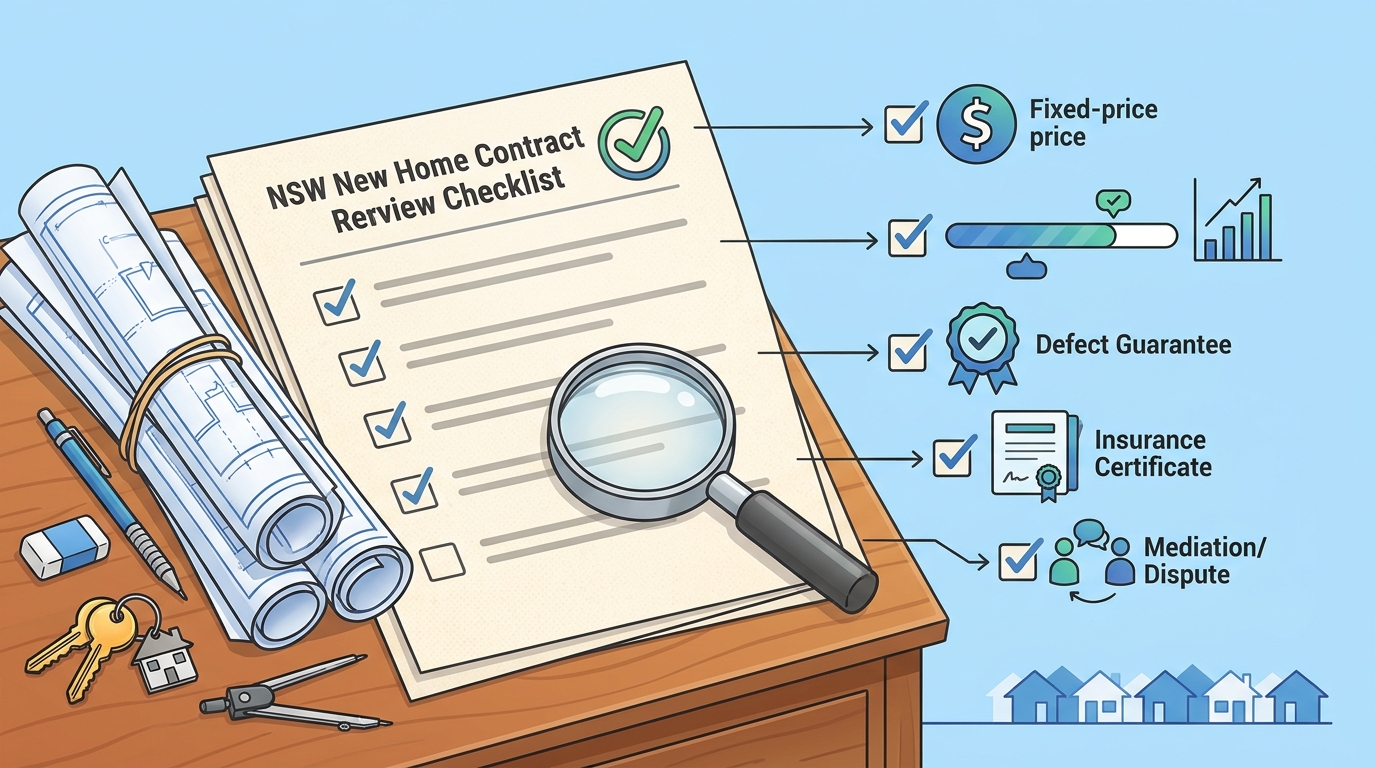
Before signing, use this checklist to verify key elements. First, confirm the builder's license number and HBCF insurance certificate. Second, check the fixed price and what is included. Third, review the payment schedule and ensure it aligns with progress milestones. Fourth, read the defect liability and warranty periods. Fifth, understand the variation and dispute resolution processes. This systematic approach reduces risk.
Allcastle Homes encourages clients to review contracts thoroughly. They provide support to explain each clause. You can visit their display homes to see the quality of their work firsthand. This helps you make an informed decision. If you have questions, ask them. A reputable builder will welcome your scrutiny. This transparency is a sign of a reliable partner.
Key Takeaways
- Verify the builder's HBCF insurance certificate and license number before signing.
- Ensure the contract is a fixed price with a clear, staged payment schedule.
- Understand the statutory warranty periods: six years for structural, two years for other defects.
- Check the cooling-off period, which is five business days in NSW.
- Review variation clauses to ensure written approval is required for changes.
- Confirm the dispute resolution process references the CTTT.
- Read maintenance instructions to preserve your warranty.
Frequently Asked Questions
What is the cooling-off period in NSW?
The cooling-off period is five business days after signing the contract. You can cancel for no reason during this time, though you may pay a fee of 0.25% of the contract price.
How long is the warranty for a new home in NSW?
The statutory warranty is six years for major structural defects and two years for other defects. This is mandated by the Home Building Act 1989.
Can I change the payment schedule in the contract?
Yes, you can negotiate the payment schedule. However, it must comply with NSW regulations, which limit the final payment to 10% and require payments to align with work progress.
What is a variation in a building contract?
A variation is a change to the original scope of work. It can affect the price and timeline. You should require written approval before any variation work begins.
Who handles disputes if the builder fails to complete the work?
Disputes are typically handled through negotiation, mediation, and then the Consumer, Trader and Tenancy Tribunal (CTTT). The contract should outline this process.
Do I need HBCF insurance for my new home?
Next Steps
Reviewing your contract is a critical step in your home building journey. Take your time to understand each clause. If you are ready to start, contact Allcastle Homes to discuss your project and review their contract templates. our team is ready to guide you through every detail.