

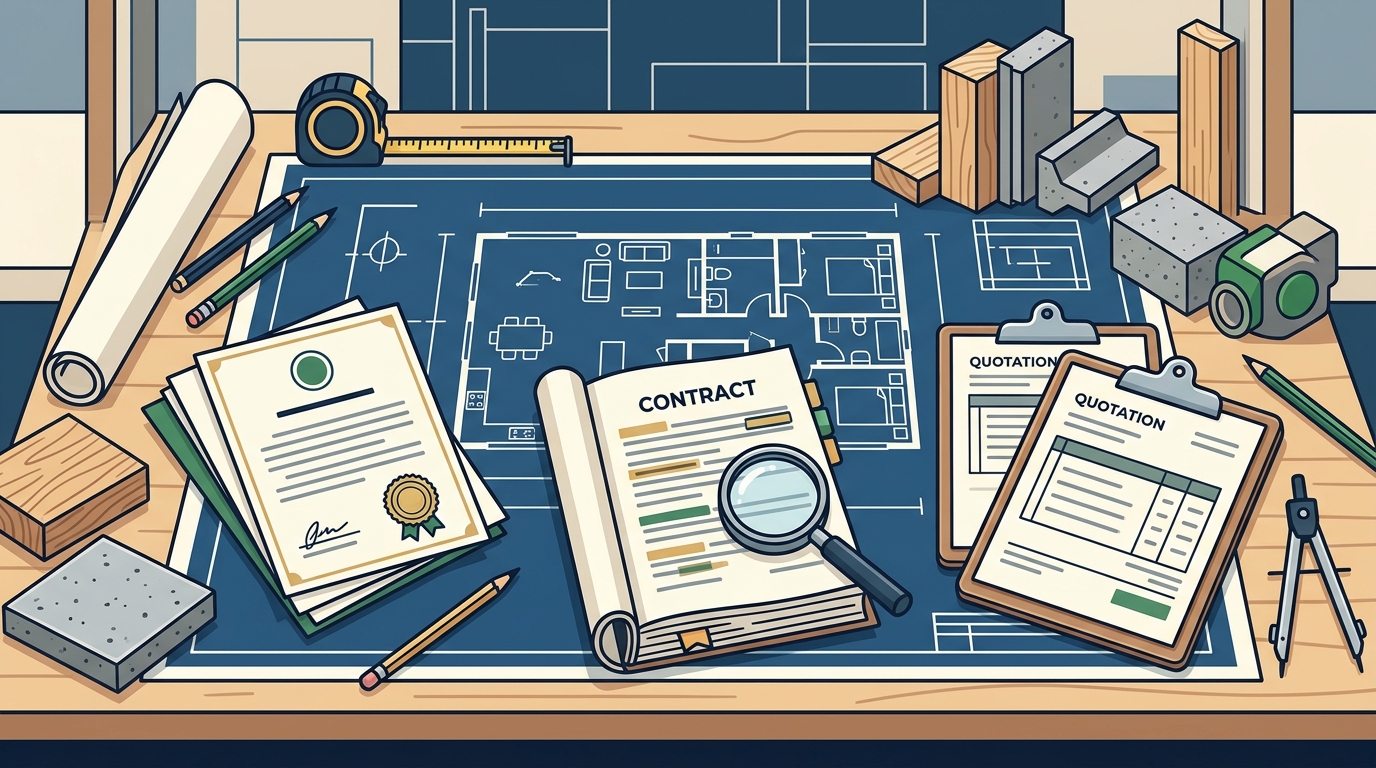
Choosing the right builder for your new home in NSW requires verifying their state licensing, reviewing their contract for statutory protections, and comparing detailed written quotes. This guide explains how to evaluate these three critical factors to ensure your project is secure, transparent, and built to high standards. We will cover the specific steps you need to take before signing any agreement.
Contract Review
A construction contract is a legally binding agreement that outlines the scope of work, payment schedules, and dispute resolution processes between the homeowner and the builder. In New South Wales, residential building contracts are heavily regulated to protect consumers from unfair practices and ensure clear communication of project terms. Understanding the specific clauses in your contract is the first step in securing a safe and successful build.
Statutory Protections and Exclusions
NSW law mandates that certain terms must be included in residential building contracts. These include details on the commencement date, completion date, and the total contract price. You must also check for any exclusions or variations. A variation is a change to the original scope of work that may affect the price or timeline. The contract should clearly state how variations are proposed, approved, and priced. If a builder attempts to include vague language regarding additional costs, you should request clarification before signing.
Payment Schedules and Progress Claims
The payment schedule is a critical component of your contract. It dictates when and how much you pay the builder. In NSW, progress payments are typically linked to specific stages of construction, such as foundation completion or roof framing. You should ensure that the payment schedule aligns with the physical progress of the work. It is also important to understand the process for claiming progress payments. The builder must provide a written notice before claiming a payment, giving you a reasonable period to inspect the work and raise any defects before the payment is due.
Dispute Resolution Mechanisms
Builder Licensing Verification
Builder licensing verification is the process of confirming that a construction company holds the necessary government-issued permits to operate legally in a specific state. In New South Wales, all residential builders must be licensed by the NSW Fair Trading authority. This license ensures that the builder has met specific financial, insurance, and competency requirements. Verifying this status is a non-negotiable step in the selection process.
Checking the NSW Fair Trading Register
You can verify a builder's license status through the NSW Fair Trading online register. This public database allows you to search for a specific company or individual by name. The register displays the license number, the class of license held, and the expiration date. It also shows any disciplinary actions or complaints lodged against the builder. A valid license indicates that the builder is currently authorized to undertake residential building work in NSW. If a builder cannot provide their license number or if it does not appear in the register, you should not proceed with the engagement.
Insurance and Financial Stability
Licensing is closely tied to a builder's financial health and insurance coverage. Licensed builders in NSW are required to hold specific types of insurance, including home building compensation cover. This insurance protects homeowners if the builder becomes insolvent or fails to complete the work. When verifying a license, you should also ask for proof of current insurance policies. A builder who is transparent about their financial standing and insurance coverage demonstrates a commitment to protecting your investment. This level of transparency is a strong indicator of a trustworthy partner for your new home project.
Written Quote Comparison
Written quote comparison is the practice of analyzing detailed cost estimates from multiple builders to ensure you are receiving fair value for the specified scope of work. A comprehensive quote should break down every aspect of the build, from site preparation to final finishing. Comparing these documents side-by-side helps you identify discrepancies in pricing, inclusions, and exclusions. This process ensures that you are comparing like-for-like options and making an informed financial decision.
Scope of Works and Inclusions
The scope of works section of a quote details exactly what is included in the price. You should look for a granular breakdown of materials, labor, and equipment. For example, the quote should specify the type of flooring, the brand of appliances, and the grade of cabinetry. It is crucial to identify what is excluded from the base price. Common exclusions might include landscaping, driveway paving, or specific electrical upgrades. By clearly defining the scope, you avoid unexpected costs later in the project. A detailed scope of works reflects a builder's attention to detail and their commitment to transparency.
Comparing Pricing Structures
When comparing quotes, focus on the total cost of ownership rather than just the initial price. Look at how the builder structures their pricing. Some builders offer a fixed price, while others may use a cost-plus model. A fixed price provides certainty, but you must ensure that the scope is clearly defined to prevent variations. You should also compare the pricing of similar items across different quotes. If one builder is significantly cheaper for a specific item, ask why. This could indicate a lower quality material or a hidden cost elsewhere. A balanced comparison helps you find the best value for your money.
| Comparison Factor | What to Look For | Why It Matters |
|---|---|---|
| License Status | Valid NSW Fair Trading license | Ensures legal compliance and insurance coverage |
| Contract Clauses | Clear variation and dispute resolution terms | Protects you from unfair changes and provides a path to resolution |
| Quote Detail | Itemized breakdown of materials and labor | Allows for accurate like-for-like comparison |
| Payment Schedule | Linked to physical construction stages | Ensures you only pay for work actually completed |
Key Takeaways
- Always verify a builder's license through the NSW Fair Trading register before signing any agreement.
- Review the contract for clear terms regarding variations, payment schedules, and dispute resolution.
- Ensure the builder holds valid home building compensation insurance to protect your investment.
- Compare written quotes by analyzing the scope of works and itemized costs, not just the total price.
- Look for transparency in how exclusions and additional costs are handled in the quote.
- A professional builder will provide clear, detailed documentation and be responsive to your questions.
- Understanding the legal protections in NSW residential building contracts is essential for a safe build.
- Choose a builder who demonstrates financial stability and a strong track record of customer satisfaction.
Frequently Asked Questions
How do I check if a builder is licensed in NSW?
You can check a builder's license status by searching the NSW Fair Trading online register. Enter the builder's company name or license number to view their current status, license class, and any disciplinary history. This is a free and essential step in the selection process.
What is a variation in a building contract?
A variation is a change to the original scope of work agreed upon in the contract. It can affect the price, timeline, or specifications of the build. The contract should clearly outline how variations are proposed, approved, and priced to prevent disputes.
Why is home building compensation insurance important?
Home building compensation insurance protects homeowners if the builder becomes insolvent or fails to complete the work. It ensures that you have financial recourse to complete the project if the builder cannot. All licensed residential builders in NSW are required to hold this insurance.
How should I compare quotes from different builders?
Compare quotes by analyzing the scope of works and itemized costs. Ensure that you are comparing like-for-like items, such as the same materials and labor standards. Look for clear definitions of inclusions and exclusions to avoid hidden costs.
What should be included in a payment schedule?
A payment schedule should outline the amounts due at specific stages of construction. Payments should be linked to physical progress, such as foundation completion or roof framing. This ensures that you only pay for work that has been completed to a satisfactory standard.
What is the role of NCAT in building disputes?
How can I ensure a builder is financially stable?
Ask for proof of current insurance policies and check their license status in the NSW Fair Trading register. A builder who is transparent about their financial standing and has a clean disciplinary record is more likely to be financially stable and reliable.
What are the benefits of a fixed price contract?
A fixed price contract provides certainty regarding the total cost of the build. It protects you from unexpected price increases, provided that the scope of work is clearly defined. This type of contract is ideal for homeowners who want to manage their budget with precision.
Conclusion
Selecting the right builder for your new home in NSW is a critical decision that requires careful due diligence. By verifying the builder's license, reviewing the contract for statutory protections, and comparing detailed written quotes, you can ensure that your project is secure and transparent. Allcastle Homes is committed to providing high-quality, transparent building services in Sydney and NSW. We encourage you to explore our building process and visit our display homes to experience our commitment to excellence. To start your journey, today.